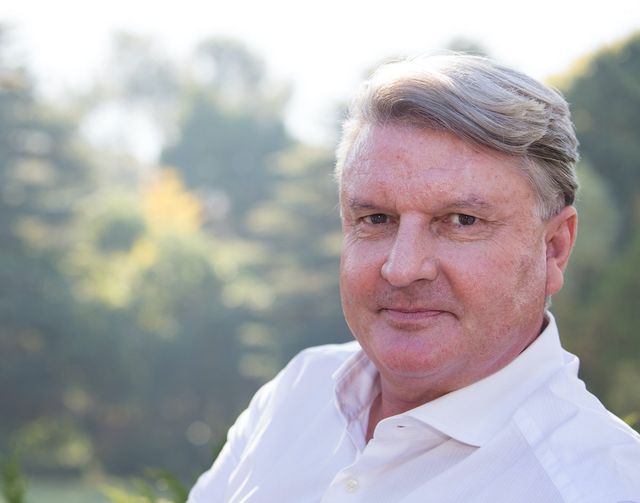
Gone way too soon Shaun
I had hoped that you would live to see a more prosperous Africa.
Something that you dedicated your life to build.
You might have left for a place beyond the reach of our arms and the gaze of our sight.
But, your wisdom endures in every word you ever wrote.
Your commitment towards building exceptional leadership in Africa persists in each one of us;
The Mandela Rhodes Scholars.
You will continue to live in our hearts and every soul you ever believed in.
Every soul you ever helped to build.
Because you saw something in me, I got the courage to dream.
Today I aspire to be “a leader in whose blend of character and intellect Africa will take pride.”
Gone way too soon SJ.
Good bye Shaun, good bye our Leader.
Dedicated to Shaun Johnson by Simbarashe Moyo (MR Scholar 2018)
Message for Shaun
Shaun, as MRF Scholars we are also human beings but we often forget this fact, or at least I do. We can get lost in the chasing of dreams and achieving big things as we aspire to be more and to do more…for ourselves, others and Africa. I didn’t experience this urgency of achievement with you. You normalized everything and put a cap on some of our deepest anxieties related to questions of whether we were enough or deserving. This sense calm and feeling ‘full’ came naturally around you. I can still see vividly the subtle, yet impactful, ways you chose to be present in a room. Showing us that we don’t need to say much or do much but just be…be us fully, wholly and completely. Perhaps I say we because it is difficult to come to terms with your passing and a sense of community masks some of the pain…but I can admit for the first time today that I have been brave enough to pen this last tribute to you. Rest well Shaun and I wish your family nothing but comfort in this time.
Love always, Gezina (MR Scholar 2015)
For Shaun Johnson,
I’ve always had a terrible memory so my year in residence in my mind is mostly just a blur of awesomeness. One of the things that has remained indelibly on my mind is when Shaun told us that if we ever needed recommendation letters all we had to do was ask him. I remember thinking this must just be a hopeful thing they tell all the new kids because… seriously? Come on! How can one guy remember all the former and present scholars well enough to write a personalized recommendation letter? I applauded the sentiment but I reserved my doubts about the probability of successful execution.
Fast forward three years later and Shaun has written multiple personalized recommendation letters for me and this one time one fellowship I was applying to forced him to do this weird recommendation thing where you had to answer question after question about yours truly. Full disclosure I didn’t get any of them but the letters brought tears to my eyes when I read them. And it wasn’t just that the letters were great, it was also that not once did he or his office make me feel like I was wasting their time which I’ve had the misfortune of feeling in other instances where I asked for recommendation. Even now my heart is just filled with warmth when I think about how he made me feel, like he had time for me. Like it was no problem to sit down and think of something great to say about me to some strangers on some random selection panel.
Thanks for giving me your time and for making me feel special.
Hamba Kahle, Shaun. What an incredible pleasure it was to meet you.
Nereah Obimbo (MR Scholar 2017)
I hereby express my sincere condolences to Shaun’s family, friends and the MRF family for this huge loss. Shaun was a truly visionary leader who, through his vision and actions, inspired my leadership journey and gave me the opportunity to grow as a leader and as a human being.
May he rest in peace.
Hervé Kapche Fotso (MR Scholar 2017)
It is with a heavy heart, and one filled with great pain that I write about a friend, mentor and leader whose life has incredibly touched me. Shaun, you have left us way too soon, but trust and believe your legacy shall continue for generations to come. When I last saw him at his farewell at Oxford, I remember thinking of how Shaun’s legacy is one some will only wish for. He together with the MRF family has made an impact on Africa and its young leaders in a way that I believe Mandela would have been proud. To be called and chosen by Nelson Mandela as the only person capable of starting a legacy project in the league of the Mandela Rhodes Foundation says a lot about one’s ability and character.
When I first met Shaun, he candidly told me of how controversial my interview had been. Unbeknownst to me, I had managed to upset half the panel and leave the other half in awe. He made it known that I almost didn’t the scholarship and was pleased to hear that my mom would have agreed with this outcome, as in her words, I had been ‘tjatjarag’. Shaun shared how impressed he was by how I stood for what I believed and then ever so gently encouraged me to add one more word to my vocabulary– diplomacy! This candid and open way of talking set the tone for our friendship, and it is moments like these, I shall forever cherish.
Shaun believed in each and every scholar that was awarded the MRF scholarship and went over and way above being a CEO as he took time to invest in us individually with great care. I remember, shortly after starting ShakeXperience nervously asking Shaun if he would give a talk at the Wits Great Hall, as the author of The Native Commissioner. His first novel had just been prescribed as a matric set work for IEB schools. And I thought to bring him to Johannesburg would a great way of offering schools an excellent opportunity to engage with the author of the novel while giving me a chance to let the world know we were officially open for business and that ‘I know people who know people’.
Knowing how busy he was, I thought he would politely decline and send us a few signed copies of his book. Instead, with no hesitation, he said yes. He offered to pay for his travel expenses on condition that I invest all the proceeds into my business and more importantly see this as his way of saying ‘I believe in you’. He gave a fantastic talk but shared how nervous he was as he did not want to disappoint me. Shaun stayed till the last person had left after signing over 50 books and taking as many selfies as there were requests. The one key message that stuck with me as a budding writer was that ‘we must always care about the character’!
Through the years Shaun continued to show nothing but love and belief in me and my work as he would call and congratulate me when he read something about the company in the papers and once got Professor Gerwel to say a word or two to me as the chairman of the MRF. I felt like God himself had called to say ‘Halala’!
When I heard about Shaun’s passing, I wept. Luna and Steph deserved at least another 20 years with Shaun. I have yet to meet a man as loving and doting as he was toward his wife Steph and daughter Luna. All our conversations started with him, giving me the latest update on his family. I relished him telling me about the newest play Luna was in and how (without any favour) he firmly believed she was the most talented performer he had ever seen.
Great leader lead so we may continue the vision even after they have departed. Shaun has left behind a vision and legacy that I believe will never cease. He will be dearly missed but never forgotten. Lala ngo Xolo Shaun!
NobuLali Dangazele (MR Scholar 2008)
To Stefania, Luna and the Mandela Rhodes Family, I would like to extend my deepest condolences on the unexpected passing of Shaun Johnson. He was an amazing soul, believed in all his scholars, and took an individual interest in them. I remember him sending us holiday wishes over the 2011 holidays ahead of our year (2012) in residence. During his farewell last year, I asked him whether Luna still loves Vampire Diaries, he was impressed with my memory but this is the relationship he shared with all his scholars. He made us all feel like one big family.
I cannot begin to imagine how you feel but I would like to say that Shaun has touched so many lives and hearts, and his legacy lives on. We will continue to celebrate and honour his life as we continue to make this world a better place for all who live in it.
Thank you
Thobela Mfeti (MR Scholar 2012)
My sincere condolence to the family of Shaun, Mandela Rhodes foundation and all MRF scholars on this huge loss. Shaun was truly an inspirational figure to all us. He embodied a strong sense of integrity, dedication and leadership and his strong passion for uplifting scholars to realise their potentials was remarkable. He has indeed left a great legacy for all of us to live up to.
Regards
Sumaiyya Thawer (MR Scholar 2013)
I am so very lost for words – a little too ironic when one is trying to write about a wordsmith. Someone whose words – and actions – have meant so much for so many people.
The Mandela Rhodes Foundation has impacted my life immeasurably for the better. Not only through the support it gave me during my studies, but also through the people I met as a scholar. I have been thinking about each of the scholars who were in residence with me in 2012 (and other scholars I have met over the years) over the past two days, reflecting about their unique contributions to my own growth. And realising again that all that growth and friendship and community would not have been possible without the foundation, and the people behind the foundation.
Shaun’s vision and forward thinking impacted so many professional lives directly. But he also impacted people’s lives through his thinking about the everyday things. The personal things. There were many scholar conversations with Shaun over the years, but I remember one particularly well. A conversation was taking place around relationships, and he mentioned that what he thinks is important is whether a person is kind. It stuck with me. A simple insight that in its simplicity held truth and value.
I regret not having been able to be at his retirement farewell last year, and not being able to be at the tribute today. But this message is a small token of my gratitude for his vision, commitment to Africa, and his commitment to the values of the MRF. And for valuing kindness.
My deepest condolences to his loved ones, and the Mandela Rhodes community at large.
Best wishes,
Elnari Potgieter (MR Scholar 2012)
I would like to express my extreme sadness and shock at hearing of Shaun’s recent passing.
Shaun is first and foremost an incredible human being and his life is a testimony to this. He has truly been a blessing in my life and I can say with the utmost confidence that many of us Mandela Rhodes Scholars see him as a either a father figure or mentor. He is a role model of the highest standard and I do hope that we can pay him back for his continuous dedication and service to us and the Foundation by living purposeful and impactful lives.
May his soul rest in peace. I send light and love to you, his family, the entire MRF staff and everyone else who has been truly privileged to have known him throughout his phenomenal lifetime
My heartwarming and sincerest condolences,
Amir Rezaei (MR Scholar 2014)
I still find it hard to believe you are no more, such a nice and good man with nice words of encourage from your poetic background. While I try to process all our different discussion I vividly remember two instances one with cohort when you said “we can’t imagine how time flies, the year would come so fast hence we should not take life too seriously but our values and principles” while the other was with me in person at the closing workshop when you said “I love your African outfit it makes me think of the African future, George you are a nice and quiet person don’t trade your values for anything”. The second conversation when on as you asked Judy how the African cultural dressing increases yearly. When I think of these words I know you loved Africa and you were a father for all. I don’t know how to thank your existence, but i deeply loved your energy for the continent. Go well Shaun and we love you SJ until we meet again. From George
George Mbella Teke (MR Scholar 2018)
It is extraordinary when a stranger can make you feel more calm and immediately cared for just before a nerve-racking interview just by his presence. This is what Shaun Johnson did for me and numerous scholars who arrived for the interviews, who had never met him before. Over time I got to know him and learn that this came from deeply caring about the vision he held for the Foundation, Africa and his belief in us as scholars.
It has been overwhelming and deeply saddening to receive the news of his passing and I would like to take this opportunity to pass on my heartfelt condolences to his family and friends, the Foundation and the MRF family.
He was generous in attention, energy, kindness and humility. I will remember the stories, enthusiasm and the warmth of the interactions I was fortunate to have.
Thank you for sharing the vision and for the encouragement. May your soul rest in peace.
With love and appreciation.
Trisha Lerato Mpofu (MR Scholar 2016)
I am heartbroken to hear that Shaun has died. Because he was someone who seldom courted attention – and tended to deflect the attention he did get onto others – I feel the need to tell everyone that he was a good man. How do you quantify goodness? He personally changed hundreds of peoples’ lives, mine included, for the better. He personally gave me purpose. He was an artist. He used his gifts to fight apartheid. He helped lay a foundation for a better South Africa, and a better Africa. He carried a heavy load, and shared his rewards. How cruel and senseless it is that he won’t be around to see more of his legacy come into fruition.
I just needed to tell you this: he was the best man, and I will always aspire to be like him. To his lovely family, and the entire MRF family, and everyone else hurting right now: I’m so sorry.
With love,
Nick Mulgrew (MR Scholar 2015)
It is, comparatively, easy to list Shaun Johnson’s impressive achievements and the esteemed positions he held throughout his life. It is also relatively easy to talk about his role in a significant number of organisations, institutions and in the difficult years preceding and after South Africa’s transition to a constitutional democracy.
It is, however, a lot more difficult to, succinctly, talk about Shaun’s legacy, and more importantly, the impact that he has made: in journalism, in South African politics and society more broadly, and even on the African continent at-large.
Still, it is most difficult to capture the major direct impact that Shaun had, as paterfamilias of an extended and diverse family that stretches over the continent and beyond, on the lives of his ‘adopted’ sons and daughters: the family of Mandela Rhodes Scholars.
It is in this role that I came to know and love Shaun. It is a role that he fulfilled with kindness, with love, with compassion, with wisdom, and on many difficult occasions, with incredible patience and understanding. As our family grew, and the challenges and personality clashes along with it, Shaun was a steady hand and a guiding light, always supported by, and supportive of, an incredible team that navigated both troubled waters and calm seas. He took a deep and active interest in the lives of every single one of his scholar-children.
Shaun had an immeasurable impact on my life, I only wish that I had one last opportunity to share with him the extent to which he influenced the path that I walked. He was a friend and a mentor to me and, fellow scholar and now my husband, Steven. He was a confidante, wise counsel, and often a refuge. I fondly remember, and am incredibly grateful to him, for having his office door open as I popped across the road from Parliament to the Foundation in some of the darker days of my tenure as a Member. He listened, he counselled, but above all, he shared in my frustrations, my anguish, and my joy. I don’t think I ever told him how much I wanted to be like him.
There are many memories: all the good times we had at celebrations, the dancing and the red wine; the arguments among us scholars, which had a noticeable impact on him; and of course, there was the Llandudno pool the day we met Madiba.
In the later years, it was his example that influenced me significantly: the value of family, of serenity, and of knowing when to pass the baton.
I extend my heartfelt condolences to Stefania and Luna, may they find strength, comfort and peace in this difficult time, and may they revel in the many memories and moments that they got to share with Shaun as a husband, as a father, and as a friend.
To my Mandela Rhodes Family, may we also find comfort, and always remember, and always fervently build on, the legacy and the impact of a truly unconquerable soul.
Shaun, thank you. May you go well, find peace, and eternal rest.
Marius Redelinghuys (MR Scholar 2009)
This is incredibly heartbreaking news.
My sincere condolences to you, and the MRF team, and especially to Shaun’s family. He held a special place in my life, and my own leadership journey, and I will miss him terribly.
I wish you all strength during this difficult time.
Sincerely
Suntosh Pillay (MR Scholar 2008)
It was with shock and grief that I learned of the passing of our beloved Shaun.
At first, I did not want to believe it, remembering how vital and full of life he was, the last time I saw him.
Even now, it seems quite unbelievable…
In losing Shaun we have lost a giant upon whose shoulders many of us stood. To me Shaun was the living embodiment of the principles of a Mandela Rhodes Scholar long before MRF come into being.
He was a leader in whose blend of character and intellect Africa took pride;
He understood education to be both a gift and a tool for the advancement of human development, to the benefit of all;
He believed in an entrepreneurial spirit to allow Africa to take with dignity its rightful place as an equal and competitive presence in the global world;
He believed in reconciliation, freedom, peace and prosperity among all human beings, who should share equal citizenship and opportunities in this world;
He believed in being part of creating a humane world in which all individuals and cultures enjoy equal respect; a world whose capacity to inspire and develop fellow human beings to their own excellence;
He believed that the advancement of individual and social fulfilment, human rights, dignity, the achievement of fundamental freedoms, is among the highest of callings;
He believed that hard work is essential, and you esteem the performance of public duties to be among the noblest of aims;
He believed in the value truth, courage, devotion to duty, sympathy for and protection of the weak, kindliness, unselfishness and fellowship;
He believed that the past, in all its imperfection, should be harnessed to benefit the present and the future; and
He loved Africa and all its peoples.
I wish him perfect peace in God’s eternal Kingdom, and I shall miss him greatly.
Please pass my condolences on to his family and the MRF Family.
Kind regards,
Alice Wamundiya (MR Scholar 2010)
“I first met Shaun long before I knew I could even become a Mandela Rhodes Scholar—through his novel. A brilliant work that I still hold very dear till today. And I am as saddened today, although for different reasons, as I was when I finished reading his novel eight years ago. Shaun was an exemplary leader and a human being who endeavoured to be the ‘purple thread on a white toga’, as Stoic philosopher Epictetus once wrote. Beyond these words, I have no others. Save to say, go well Shaun. Go well.”
Sending much love and strength to you as well Julia x
Best,
Rufaro Samanga (MRF Scholar 2018)
It is with true sadness that we took note the passing of Shaun Johnson, journalist, activist, author, father, former CEO of the Mandela Rhodes Foundation, and first and foremost, South African hero. Like so many, I have a treasure trove of fond memories of Shaun. He was a mentor to me and hundreds of others. I wish I possessed the words to do justice to the enormity of Shaun’s legacy, but I fear, being of our time, no one alive today could yet fully comprehend it. For through his deeds and actions he transformed the lives of so many. He was, and always will be, the truest embodiment of The Mandela Rhodes Foundation motto…’ inspire to be’. This son of Africa now returns to her comforted by the knowledge that he helped set the stage for her rise. The rest is now up to us…
Best Regards,
Anton Botha (MR Scholar 2008)
I am still in shock that Shaun has left us. Words cannot express how I feel for Shaun’s family, the foundation and his friends. As a former MRF scholar Shaun’s wisdom, inspirational lessons, humility and great wisdom are qualities I will forever cherish and the time we spend together
May his soul rest in eternal peace
Best Regards
Obert Bore (MR Scholar 2017)
It is terrible to hear the passing of Shaun. It is a huge loss. I express my sincere sympathy to his family and the entire MRF family. May his soul Rest In Peace.
With sadness!
Binyam Alemayehu (MR Scholar 2016)
I could not believe the first time I saw a Facebook post about Shaun’s passing. I felt confused and later broken. Many people have various stories to tell about Shaun, but I remember him as someone who reinvigorated my spirit to propel into my career. You have gone to a better place my brother and may God rest your precious soul in eternal peace.
Sidney Muhangi (MR Scholar 2016)
Thank you for your outstanding leadership and kindness. You nurtured all talents and always embraced each of our uniqueness as MRF Scholars. Your distinct soft laughter and compassion will not be forgotten. Thank you! Rest In Peace Shaun Johnson.
From: Mmatshepho Phasha-Muchemenye (MR Scholar 2011)
I was shocked and deeply saddened to hear of Shaun’s passing. There was a part of me that cannot comprehend a life without him being in this world, especially as he in many ways represents a significant part of my MRF experience which has ultimately shaped my life in so many wonderful ways. My last memory of Shaun was briefly bumping into him along the road in Oxford in 2019 as he was leaving his College for a formal dinner. The exchange was brief, but as always with interactions with Shaun, he was so invested in finding out how I was. His love for the MRF and its Scholars is only surpassed by his true love for seeing the next generation reach their dreams. He was an inspiration in every way and someone, to me, embodied all the qualities that can have such a positive on the world.
The whole MRF team are in my thoughts.
All of the very best during this difficult time.
Richard Burman (MR Scholar 2015)
The first time I met Shaun was at my interview for the MRF Class of 2018 cohort. I vividly remember his smile and the shine in his eyes. He looked so jolly and warm, I remember thinking that he reminded me of Santa Claus. Shaun then immediately set my nerves at ease by asking if I had a nickname and I couldn’t help but smile.
Later, as part of the 2018 Class, Shaun’s wisdom and knowledge awed us. His insights into the life of Madiba and the stories he shared of his interactions with him warmed my heart and transported me to a different time.
Every interaction I had with Shaun was inspiring. His legacy is rich and his contribution to South Africa and Africa, through the foundation and his literary works will continue to remind us of the Shaun that we all knew and loved.
Goodbye Shaun, we are forever grateful.
Linet Kimathi (MR Scholar 2018)
I am sending you all love during this sad time. Shaun played a huge role in shaping my personal journey, as he did for all of us. I know I cannot capture all he meant to us, so know that you are all in my thoughts today.
With affection,
Matt Beetar (MR Scholar 2008)
It is with great sadness that I am writing this message.
Shaun was an amazing human being and was instrumental in shaping my leadership journey. He was always so thoughtful, and every time I would e-mail to share another milestone in my academic or professional life he would respond with the most encouraging messages.
Who can forget his turtleneck sweaters, and his sense of humor whenever he had to give a speech? I’ll always remember the conversations we shared and hold all of the learnings dear to my heart.
We have lost someone dear to us, but I am sure the heavens are smiling right now. His contributions will continue to live on with us Mandela Rhodes Scholars and in others he has touched.
To his family, friends and the wider MRF family, I send all my love. May his soul rest in peace.
Leticia Taimo (MR Scholar 2013)
I’m shocked and saddened by Shaun’s sudden passing, as I’m sure is the case for many today. My deeply-felt commiserations to those who worked most closely with him at the Foundation, and to his family and friends. Strength to you all in this difficult time.
Shaun struck me as a person passionately committed to his principles, while never closing the door on the possibility of change in the pursuit of justice. Thoughtful, energetic, brave and kind, he embodied the tenets of the MRF. When he spoke, it was always with enthusiastic optimism — a rare quality, and one which lifted the spirits of everyone around him. He was so interested in the world, in people, in our continent, and in making a difference.
It was an honour to meet him. He touched the lives of every scholar in the programme. Going forward, I believe that his influence will be still felt by every scholar who comes after.
He will be missed.
My condolences,
Kerstin Hall (MR Scholar 2016)
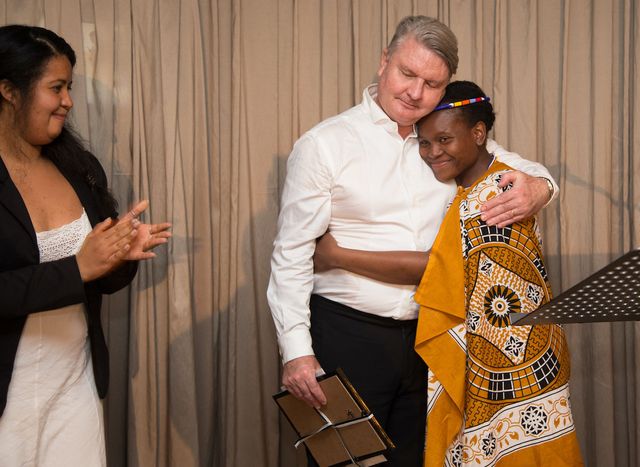
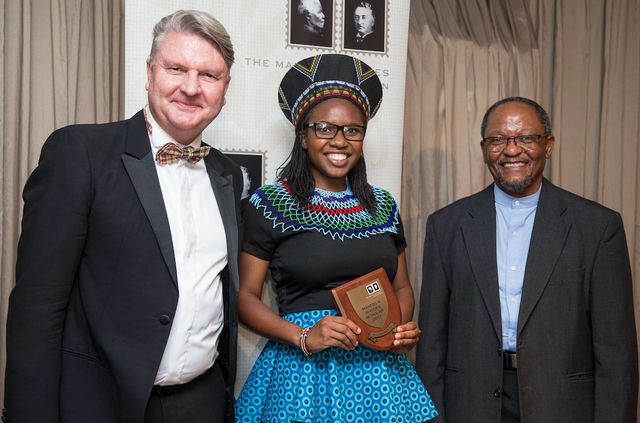
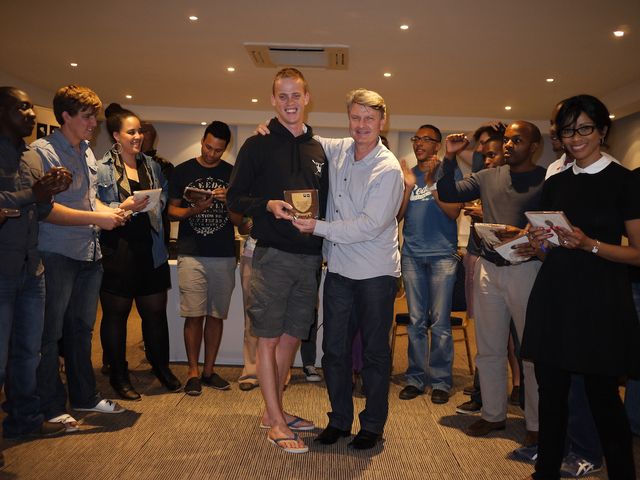
During our graduation, as I stepped up to the podium to accept my shield, Shaun Johnson took a moment to acknowledge and celebrate the news of my film’s submission to the Academy Awards. He didn’t have to. But joy and pride were bubbling out of him. He called me the MRF’s, …very own superstar.
He said it like he had always known it.
I will miss that gentle giant dearly.
Regards,
Silas Miami (MR Scholar 2018)
I first met Shaun Johnson not at the interview for the Mandela Rhodes Scholarship, but on the walls of the Rhodes University Journalism and Media Studies Department. I walked by his name almost every day, familiar with his work but knowing nothing of the person. When I walked into the interview in 2017, I was nervous. But Shaun was nothing like the intimidating man I imagined him to be. He was kind. He was funny. He asked me about my experiences at Rhodes University and my interests in journalism. And it was Shaun who called me to tell me I was a 2018 Mandela Rhodes Scholar.
Shaun Johnson was both larger than life and wonderfully human. He was intelligent but not arrogant. He was tremendously busy, but he always made time to see the MRF cohort. He listened to us more than he talked. And he cared. He cared about his work. He cared about good leadership. He cared about all the MRF scholars. He taught me that a leadership of love and caring is a powerful thing. I’m eternally grateful.
So thank you Shaun. Thank you for everything. Thank you for looking past a nervous student and seeing something I hadn’t quite seen in myself yet. You were a light and you shared your gift with so many. This world will miss you.
Mako Muzenda (MR Scholar 2018)
It was Shaun Johnson who phoned me at lunch in November of 2014, to announce that I had been awarded a Mandela Rhodes Foundation scholarship for 2015. He told me to go out and celebrate. His voice will always be associated with my highest academic honour.
He encouraged my ambition to write when he handed me my book hamper at our first workshop. I thought he would live to see my first publication.
When we went to Groote Schuur, I called Cecil John Rhodes a megalomaniac and Shaun Johnson did not disagree. Instead, he highlighted the strain with which the Brit’s legacy is married to Madiba’s.
I did not know Shaun Johnson well, but I saw a compassionate man who sought to understand others. There was always the feeling that we scholars were in safe hands with him. He was laid back but not aloof, always observing and sometimes engaging from a desk somewhere in the room. At mealtimes he availed himself for informal chats, to ensure that the scholars felt him approachable. When it was time to party he gave us licence, only reminding us to honour our morning commitments.
There was sensitivity and humanity in Shaun Johnson, as demonstrated by his choking up at the Rugby World Cup ’95 video. Most importantly, there was humour and levity, which I saw as he belly-laughed at our talent show, when I said in order to lead a sweet life, I would like to be reincarnated as a white person’s dog. There is humility in people who do not take themselves too seriously.
Even though the last time I saw Shaun Johnson was five years ago, I feel ambushed by news of his passing. I fully expected to see him again but life and death make fools of us. There is nothing I can say to his family and friends to take away the pain. We lose the ones we love; now carry him with you.
God receive you, Shaun Johnson
Lumumba Mthembu (MR Scholar 2015)
I am so shocked and saddened to hear today of Shaun’s passing. I don’t really have a specific message or thoughts to share as feel like I need some time to reflect and process this loss before doing so, but I just wanted to reach out immediately upon reading to express my condolences to everyone at MRF. He played such a big role in helping me be where I find myself today, and for that I am so grateful.
His family and the extended MRF family are in my thoughts and prayers at this sad time, and I wish I was there to pay my respects in person.
I hope that you are doing alright, and sending a hug to you and the rest of the team there in the offices.
With love and sadness,
Dr Bronwyn Tarr (MR Scholar 2008)
Dear Johnson family,
I am deeply saddened by the news of Shaun’s passing. He was such a great inspiration to all of the Mandela Rhodes Scholars. Shaun embodied integrity, kindness and honour, and it was a great gift to have known him, even for a short time. My sincere condolences to you at this time of mourning. You are in my thoughts and prayers.
Love,
Sirika Pillay (MR Scholar 2005)
I walked into the interview room at Mandela’s residence in Bishopscourt sometime in late October 2018. Four faces and pairs of eyes starred at me and smiled. Among them was Shaun’s – the only white man in the room. It was a diverse mix – the interviewers. And I was sincerely scared because it was my first scholarship interview and my life depended on it. Actually, my future and aspirations depended on it.
Shaun opened the interview. He smiled again and his eyes glinted – what a wonderful smile – with a huge assurance. He told me to relax, that it was a conversation, and not really an interview. He calmed me in those moments before proceeding with his question.
Remembering these moments presently fill me with tears. I am in tears and grieving. Because the more I dig up memories of him, the more the simplicity, openness, and altruistic nature of his life shine forth.
During one of our workshops, he said this which has become my moral compass checker in making important decisions – never you be flexible about your values.
Shaun was an illumination of light, authenticity, knowledge, diversity, humanity, leadership and mentorship. He lit up the room whenever he walked in.
I am really grateful to the universe that I met him in my life journey. He will be missed.
With best memories
Chimezie Anajama (2019 MR Scholar)
I woke up to such sad news this morning, the passing of Shaun Johnson.
Still remember the conversation we had in June 2013 in Stellenbosch, when he reminded me that making a difference involved doing a collection of little things (and with all the strength and courage you could muster, bigger things) with integrity and determination to see a better day and a better world.
Shaun is not here anymore, but he’s left a legacy that is my Mandela Rhodes family, our commitment to inspire the next and that will live on forever ❤️
#MRF13
Lisa Chella (MR Scholar 2013)
I would like to extend my deepest condolences to the Johnson family, the MRF family and all who knew and loved Shaun. Personally, my life was impacted by his leadership and his literature during and beyond my residency with the MRF. He will be sorely missed and may comfort come to all who share in this loss.
Lindokuhle Benjamin Matsebula (MR Scholar 2015)
This is really sad news 😭 , may his soul rest in peace and may the Lord comfort us during this period.
With heartfelt regards,
Kholiwe Simeon (MR Scholar 2016)
To the man who laughed at my response about what I thought about Trump in the interview. To the man who called me interesting for saying his mother should have spanked him as a kid or he wouldn’t be throwing a world wide tantrum right. To the man who decided to take a chance on me, even when I doubted my abilities to lead. May your soul rest in peace. May whatever God has in store for you wow, carry you as much as you did the same for all of us. Prayers and thoughts with the Johnson family, and all my MRF family. Johnson family, you shared with us one of your own. And he has changed my life in ways I did not think could ever happen. I was just a girl from the township who wanted to make a difference, his foundation of the MRF, his presence there, made it so people like me could meet and look up to the people we read about and know we could do anything and everything to change Africa’s path. We were honoured to have a man like him lead us.
Kind regards
Bulelwa Lela Faya (MR Scholar 2019)
Shaun has helped ensure that Mandela’s legacy may live on not only in memories and words, but in action – through the lives of the hundreds and soon, thousands of Mandela Rhodes Scholars across the world. On a personal level, advice that Shaun gave me at our final workshop fundamentally changed the way I saw my place in this life and has been a guiding star ever since. The world has lost an inspiring leader and the Mandela Rhodes family has lost an incredible father. Thank you for all that you’ve done for us, Shaun. May you rest in peace and power.
Love,
Colin Besaans (MR Scholar 2016)
Although I only knew Shaun for a year, I felt very connected to him. Charming, witty, but also immediately and very obviously thoughtful and genuine, Shaun immediately made me feel welcome in my MRF interview. The thing he said first grounded me – he mentioned that he had seen on my CV that I loved writing, and he then said that he was also a writer. In one warm sentence, he had elevated a hobby that I love into a lifestyle – a kinship – that we shared. I was incredibly humbled that he equated my pastime with his profession and his gift.
Whenever we met at workshops, we would talk about writing – and again, Shaun would address me like a peer. Two vignettes come to my mind. One was at the first workshop. It was dinnertime, and Shaun was seated alone at a table, and so I went to go join him. Although a little intimidated at first, he quickly made me feel at ease.
“Julia, can I ask you something?” he asked, beckoning me in like he was about to ask my opinion on some grand secret.
“Of course!” My heart raced. What would he ask? Perhaps it would be about my vision of African Development? How to counter South African exceptionalism? What the greatest challenge of civil society movements might be on the continent today? I instantly started to sweat, triggered by the seemingly impossible essay questions he had set for the application process.
“Are you a fan of Harry Potter?”
I proceeded to choke on my bread roll, which, despite my best efforts to disguise, he noticed and laughed at.
“A huge fan!” I exclaimed in between mouthfuls.
“Ah, terrific!” he responded, eyes twinkling. “I’ve been involved with MRF for many years, as you know, but I’m starting to take a bit of a backseat. I’m going for a Dumbledore approach – gentle, but there when he needs to be. How do you think I am doing at it?”
There he was again, building kinship. Despite the fact that we were nearly forty years apart in age, he cared what I had to say about his leadership – and saw eye to eye with me; first, as a writer, and now as a leader. Neither of those were titles I might have used to describe myself at the time. In fact, for much of the workshops, I felt like an imposter. But when Shaun asked you something, your answer mattered to him, and made you feel worthy of such labels. For the rest of that week, while he lead various talks and exercises, I detected that Dumbledore-ish kindness and knowledge which I so loved about the character in the series. And a lot of wry wit, too. I struggled not to imagine him with half-moon spectacles, a flowing white beard and resplendent purple robes because the analogy to Dumbledore seemed so fitting.
Now on to the second vignette. This was at our second workshop. Again it was at a dinner table, and this time he asked me about my writing. He inquired about what strategies I employed to get out of writers’ block, how I structured my writing periods and how I found the movement between different genres of writing – journalism, poetry and fiction, all forms that we both loved. I had much more to learn from him than he did from me. Nonetheless, his interest in my responses was sincere, and he was very generous with his advice for me. He explained that he wrote best when he got into a sort of “vortex”, writing for long periods of time without a break.
He explained how he had written much of his novel, The Native Commissioner in such a way – spending large chunks of time in “the vortex” where focus and flow met. What started as a rather abstract conversation about the process of writing quickly transitioned into a candid discussion about his own psychological process writing the novel. He was open about his relationship with his parents, and what urged him to tell their story; he described the complexities of writing a story that was based on biographical fact, while trying to maintain the privacy and dignity of his own family. This was hugely valuable advice for a novice like me to receive, had it been for one minor issue: I hadn’t yet read the book.
Shaun gave an excellent – and very revealing – synopsis of the novel. But fifteen minutes into this detailed conversation about characterisation and imagination and story arcs, Shaun noticed my awkwardness and raised a wry eyebrow. There was that Dumbledore-ish wit again!
“I’m mortified,” I admitted, blushing. “I’m sorry I didn’t say anything sooner, but I haven’t yet read The Native Commissioner. My uncle loves it and I’ve only heard good things about it. I promise I will go out and get it!”
Shaun laughed heartily, and then playfully admonished me for allowing him to spoil the ending of the novel for me. But he then turned the conversation towards my own writing; a subject which, although much more familiar to me than his novel, was challenging for me at the time. I love writing, and feel like the freest, most enriched version of myself when I write, but I wasn’t finding much time to do it.
He was sympathetic when I explained that I hadn’t had the creative energy while studying to access “the vortex” for a novel on which I had been working. Shaun believed very firmly that my academic process would strengthen my creative writing and that my thesis should, at least for the moment, come first. I think he believed in people’s abilities to do many things well – as he had done. Ultimately, however, he backed me to finish my novel. It’s not every day that you are granted such expressions of faith. I hadn’t worked on the manuscript for over eighteen months at that point, and having his conviction behind me made me feel – and still does – that it was an endeavour worth seeing through.
The week after the workshop I went out and bought the novel, intending to read it before my final workshop and to tell him my thoughts. Although I went into the novel knowing how it would end, and having had very high recommendations of it, I was entranced by the story. There were so many moments where I clicked with what he was saying in a very tangible way; isn’t that the dream of an author? To make the reader sigh and think “ah, this guy just gets it”. The story dealt with suffering so sensitively, and blended fiction with history in a way that made me think very carefully about our present.
But by the time our third workshop came around, Shaun had stood down from the MRF to make way for new leadership, and to work on his own writing again. I had meant to email him to announce that I had finally read his book (and thoroughly enjoyed it) and to mention some of my thoughts about it. But I got swept up in things and I never got round to doing it.
I myself hadn’t written anything creative for a very long time. I was grappling with the idea that I should be doing something “good” with my talents, and for many reasons, I felt like I couldn’t commit to finishing my novel because such a hobby was trivial, and immaterial. In my mind, it lead to no activism or change; a waste of time.
Something that I now realise is that Shaun believed equally firmly in the power of ideas and the power of art, as he did the power of action – his life and his various career incarnations attest to that. To him, art, creativity and imagination were not incongruent to pragmatism, altruism and hard-work. In fact, to Shaun, those two realms – worlds which felt so distinct in my own mind – enriched each other profoundly. Again, his life work demonstrates how imagination can enrich advocacy.
How I wish now that I had emailed Shaun to discuss his novel and writing more.
And how heartsore I am that the first thing that I’ve written in so long that isn’t a to-do list or set of research findings – instead, something that felt creative and exciting to me – would be this tribute to him.
I will remember Shaun for treating me like an equal, and for building the network of kinship that is MRF. I will remember him for his Dumbledore-like sageness, inquisitiveness and integrity, as well as his joviality. I will remember him as someone who believed in me, and believed in the coupled power of words and deeds. Rest peacefully, Shaun. Wherever you are right now, I hope you’re writing lots and that the vortex treats you kindly.
Julia Lazar Chaskalson (MR Scholar 2019)
Cambridge’s weather is especially miserable this evening. It seems fitting.
I’ve been immeasurably grateful for the many opportunities Shaun both conceived and orchestrated for his scholars, including often stopping on Kings Parade to take in the wonder of my time pursuing a PhD here in the U.K.
Today, however, has held no such joy. I had always dreamed that I would be able to honour Shaun in my graduation.
My deepest condolences to his family, both at home and at the Foundation.
Mark John Burke (MR Scholar 2012)
To the MRF community, family of Shaun and all people of goodwill,
Waking up to the news of Shaun’s passing was a nightmare. I met Shaun for the first time on the 26th of October 2017 when I travelled to Cape Town for my interview. I was the last person to be interviewed on the day at about 14:45pm and as I positioned myself in the “hot” seat, Shaun jokingly said: ‘Thank you for brightening our tiring day with your pink tie, please take a seat.’ The interview went so well to an extent that I told myself, even if I do not get this scholarship, I wanted either Shaun or Judy to be my mentor. I eventually got the scholarship and got a chance to interact and learn more from Shaun during my time in residence – what an amazing leader he was and getting to learn from him was nothing short of a blessing and a privilege. His humanity, kindness, vulnerability, and generosity will forever be missed.
May his dream and that of Madiba of a flourishing Africa with authentic leaders continue to burn in the hearts of the many that he touched.
“Do not take your life too seriously but take your principles seriously” – Shaun Johnson
Rest in Eternal Peace Athol Johnson. You will be dearly missed and remembered – You fought the good fight.
Edward Murambwa (MR Scholar 2018)
I’m very sad and devastated to learn about the passing of Shaun. I met Shaun in 2007 through Mandela Rhodes Foundation. I thank Shaun for scholarship money, life mentorship, and prestigious opportunity to meet Madiba. A giant tree has fallen. Africa is mourning one of its finest son. A beautiful human being. A great leader. Condolences to the family and friends! Let’s take comfort, he is at a better place!
Lawrence Mashimbye (MR Scholar 2008)
Shaun was such an inspiring servant leader who lived for others, this is so evident in his life’s work. He left a lasting impact even in a short meeting with a person. I’ll always remember how he personally called me to tell me I was selected as a 2017 MRF scholar, even rescheduled the call when I didn’t pick up the first time. That alone made me feel special. Thank you for modeling how leaders should always care and be about the people they lead. Whenever I remember and hear Madiba, I’ll always remember Shaun Johnson. Rest well leader ❤️
With Sadness,
Mary Silolezya Simujayangombe (MR Scholar 2017)
The passing of Shaun is a really difficult news to process. Shaun meant something different to individual scholars. He was convinced that each individual scholar was unique and had merited being a scholar. No one was pushed to the background. The most exciting thing I heard from him was urging us not to compete because we all deserved a seat at the table. You could see his passion and belief that each scholar had the potential of being a trans formative leader in their sphere of influence. This is a saddening moment but we shall carry the torch of his passion for humanity and endeavour to transform our communities because he believed in all of us.
Kind regards,
Daniel Chimezie (MR Scholar 2017)
I’m lost for words….
Lost my Dad on the 14th Jan, 2020 still feeling a deep sense of grief and sadness and now Shawn.
This is heavy!
Thanks for the email and I wish you all and Shaun’s family, strength, clarity and light.
Petunia Mpoza (MR Scholar 2010)
A catchphrase I coined for Shaun Johnson was “I was in the room when..”; a statement he would make each time he shared a personal anecdote about some amazing historical event he observed. With a flip of his hair he would share his experiences and enthrall whoever had the privilege of hearing him speak. During my time as Scholar I cherished such memories because they spoke to how influential this humble giant had been to the history of his nation. I could only hope to have opportunities to serve my own nation in that way. Shaun’s ability to open doors of opportunity was another one of his memorable attributes.
I recall how, in a matter of seconds, he could put me in contact with people who would otherwise be unreachable. He was able to connect the various spheres of his world almost effortlessly and with such humility despite the fact that he walked in corridors of power. He lived out what we in the Mandela-Rhodes family call “Madiba Magic”. With it, he was able to ignite even the darkest of days.
I recall times he made himself available to hear what was going on in my life and offer counsel when it was needed. He was just that sort of guy and I found that extremely inspiring. He truly remains one of the leaders whose journey has informed my own as I Aspire to Be.
The news of his passing darkened my day but upon reflecting on the small part of his life he shared with me, I realized that he left the world a lot brighter than he found it. That is not something many people have been able to achieve. His leadership at the Mandela-Rhodes Foundation can best be described as inspirational as he took the little he was given and made much as evidenced by the lives of the many African leaders who have passed through his tutelage.
His spirit lives on, the world he left is brighter because he was in it and some of us have the privilege of saying “I was in the room when…” Shaun Johnson spoke.
My heartfelt condolences to his family. The world owes them thanks because they shared him with us and I pray they will be comforted in this most trying time.
With condolences,
Kangwa-Musole Chisanga (fondly known as K.C.) (MR Scholar 2014)
© Mandela Rhodes Foundation · Privacy policy · Disclaimer · Umoya policy · Contact · Website by Entle